
How to Prepare for Your First Podcast Interview and Show Up Ready to Deliver
What to do in the 48 hours before your first recording, how to set up your environment for a great audio experience, and how to deliver value that makes hosts want to have you back

The recording date is confirmed. The calendar invite is accepted. And somewhere between that moment and the actual interview, most first-time guests make the same mistake.
They prepare what they want to say instead of preparing
what their audience needs to hear.
The difference sounds subtle. The impact on the interview isn’t.
A guest who prepares around their own expertise shows up ready to perform? A guest who prepares around the host’s audience shows up ready to serve?
Hosts notice the difference within the first 5 minutes and listeners feel it across the entire episode.
So no, preparation isn’t about “memorizing answers.” It’s simply showing up with enough clarity that the conversation can go anywhere and still deliver value.
What To Do 48 Hours Before the Recording 🗓️
Two days out is when preparation becomes practical and three things belong on the list.
1. 🎧 Listen to at least one recent episode of the show
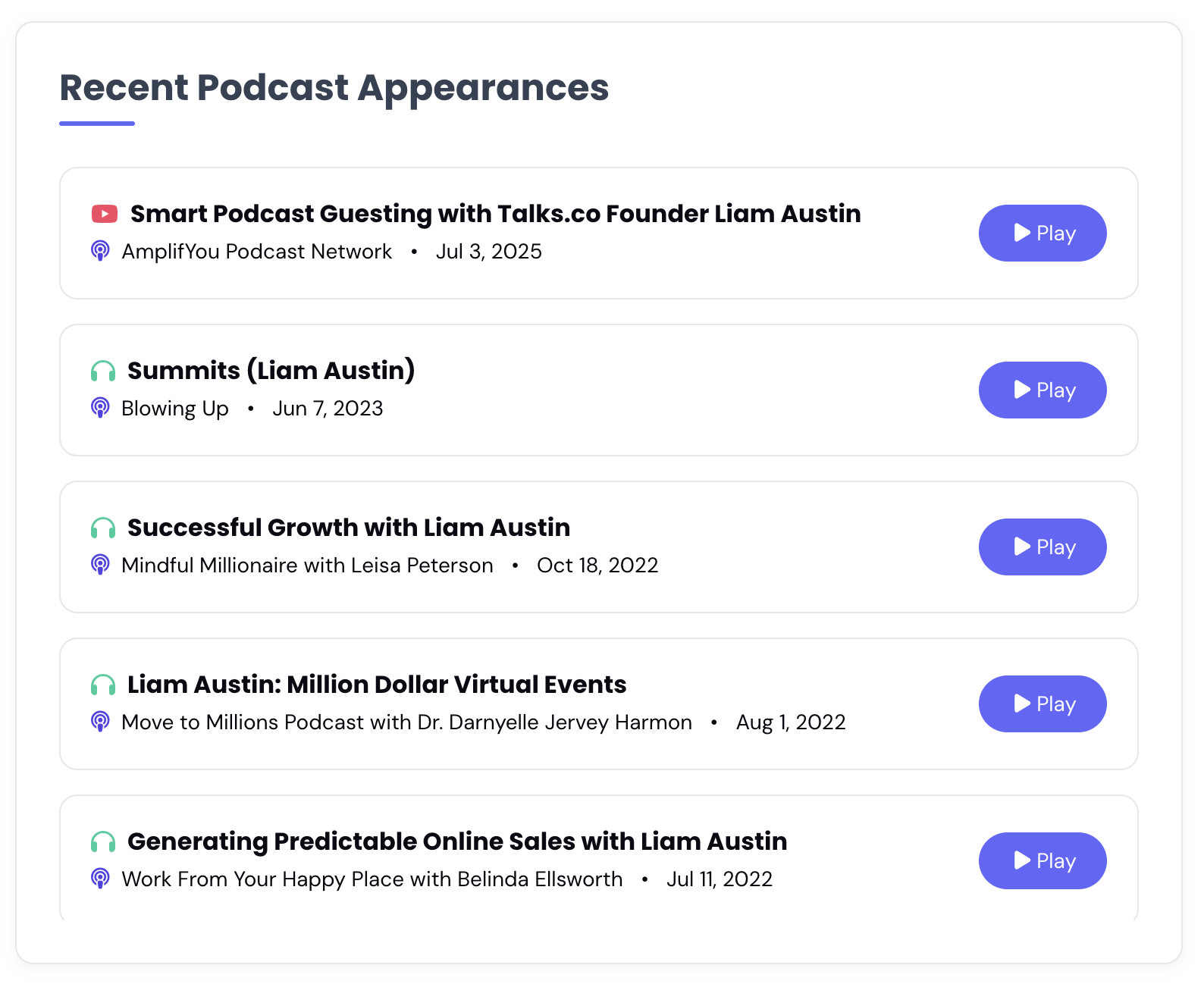
Not to research talking points. To understand the rhythm and tone of how the host runs a conversation.
What to pay attention to: How the host opens interviews, what kind of questions they ask, whether they prefer guests who drive the conversation or guests who respond to questions, and how they typically wrap up.
Why this matters: A podcast guest who shows up matching the show’s natural energy makes the host’s job easier. A guest who shows up with a completely different energy? Creates friction the host has to manage.
What to do with what you learn: Adjust your planned talking points and examples to fit the show’s style rather than forcing your preferred interview format onto a host who runs things differently.
2. 📋 Prepare 3 core talking points
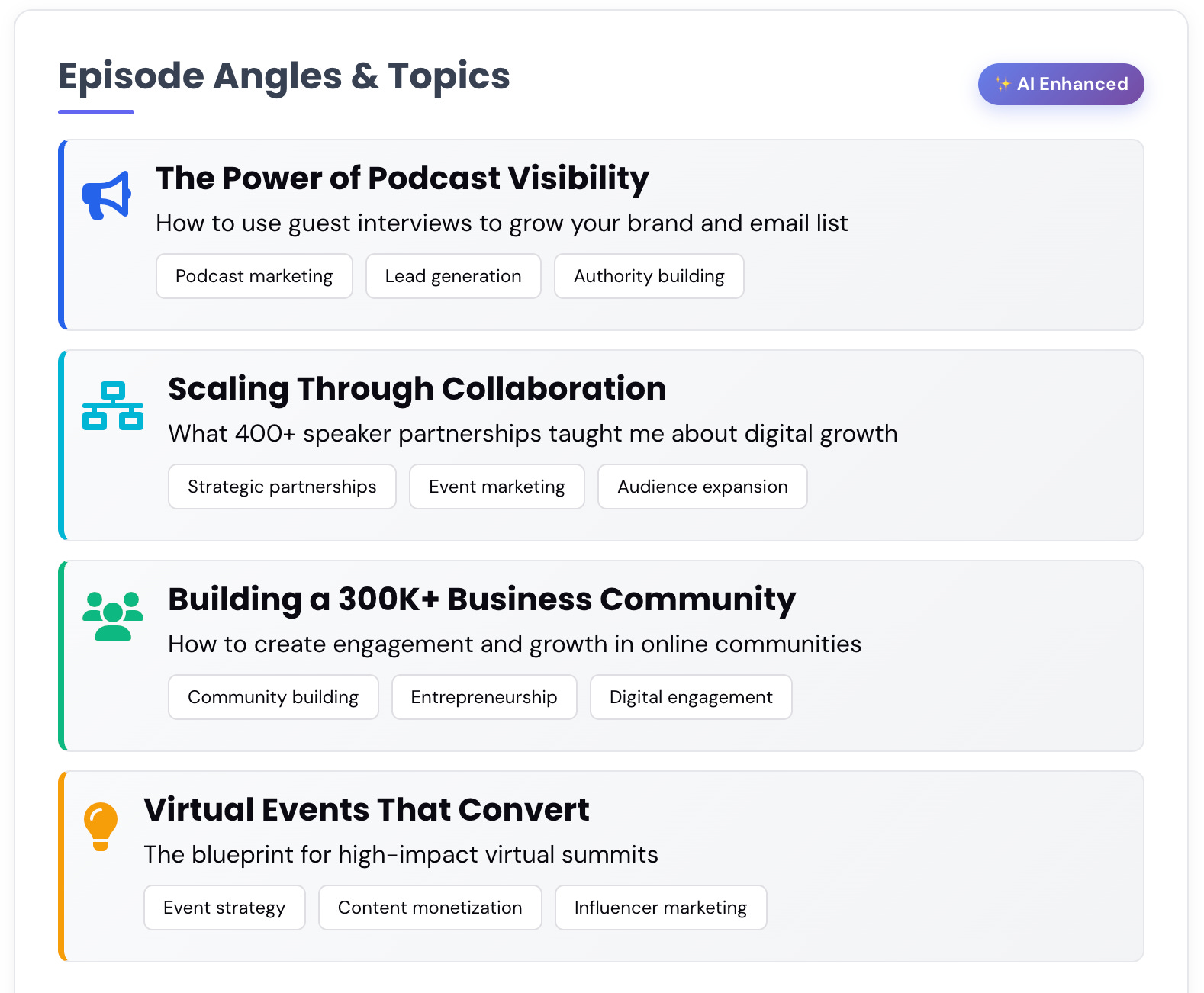
Three specific insights, stories, or frameworks you can bring into the conversation naturally when the opportunity arises.
What a talking point actually is: A specific, concrete thing you can say that delivers standalone value to a listener who knows nothing about you; not a general statement about your expertise but a specific observation, result, or story.
Why 3 specifically: Enough to give the conversation depth and direction without over-preparing to the point where you sound scripted or start forcing topics into the conversation whether they fit or not.
How to test them: Say each one out loud and ask yourself if a complete stranger would find it useful, memorable, or surprising; if the answer is no it needs more specificity.
3. ✅ Confirm your technical setup
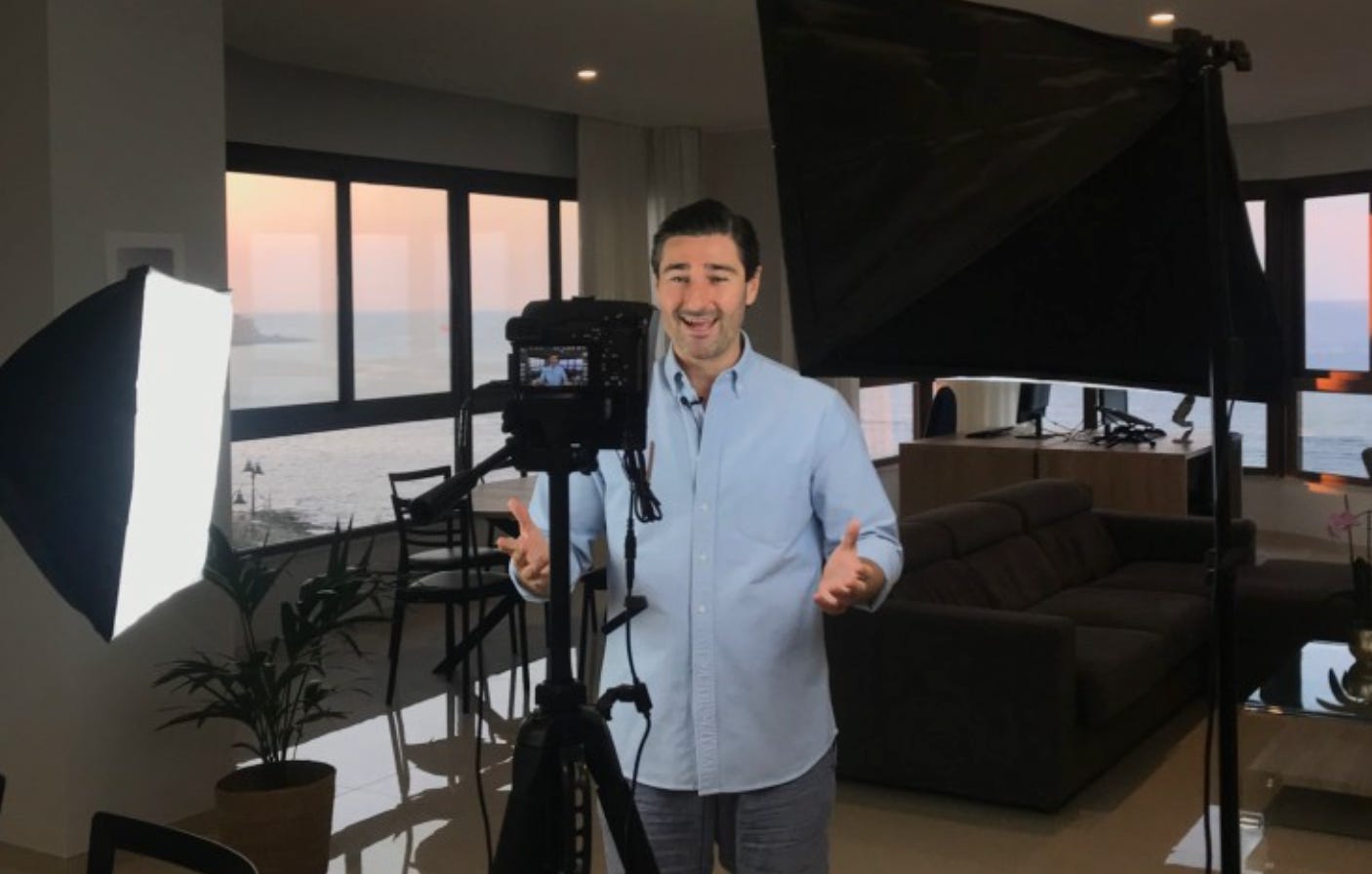
Audio quality is the one thing that affects how a listener experiences your expertise before you’ve said anything meaningful.
What to check: Your microphone or headset, your internet connection, the recording platform the host uses, and your background if the interview is on video.
The minimum viable podcast setup: A headset with a built-in microphone is meaningfully better than laptop audio; a quiet room with no echo is meaningfully better than a reverberant space.
What to do if you’re unsure about your setup: Record a 30-second test on your phone or computer and listen back. Problems that are obvious in a recording are problems you can still fix before the interview.
How to Show Up On the Day of Your Podcast Interview 🎙️
The recording itself is where preparation either pays off or gets exposed. Five habits separate guests who deliver consistently from guests who deliver occasionally.
1. 🕐 Join 5 minutes early
Not because punctuality is a virtue in the abstract. Because 5 minutes of casual conversation before the recording starts gives both you and the host a chance to settle into the dynamic before the mic is hot.
What to do in those five minutes: Confirm the format, ask if there’s anything specific the host wants to cover or avoid, and let the conversation warm up naturally.
What this produces: An interview that feels like a continuation of a real conversation rather than a performance that starts cold on cue.
2. 🎯 Lead with specificity, not credentials
The first answer you give in any interview sets the tone for everything that follows. Guests who open with credentials signal that they want to be perceived as impressive. Guests who open with a specific story or insight signal that they’re there to be useful.
What specific looks like: “The thing I’ve found most counterintuitive about [topic] is [specific observation].”
What credential-leading looks like: “I’ve been doing this for 15 years and I’ve worked with hundreds of clients.”
Why specificity wins: A listener who finds your first answer useful will stay for the rest, but a listener who finds your first answer impressive will decide whether to stay based on what comes next.
3. 🔗 Bridge naturally to your talking points
Prepared talking points are useful only if they fit the conversation naturally. Forcing them in regardless of context makes the interview feel rehearsed and makes the host feel unheard.
What natural bridging looks like: Waiting for a question or moment in the conversation where your talking point is genuinely relevant and then bringing it in as a response rather than a pivot.
What forced bridging looks like: Interrupting the natural flow of the conversation to insert a prepared point regardless of whether the moment calls for it.
The practical approach: Hold your talking points loosely. If all three fit naturally, use them. If only one fits use that one. If none fit? Let the conversation lead and trust your expertise to fill the space.
4. 📣 Mention your Talks profile and lead magnet clearly`
Most podcast hosts will ask where listeners can find you at the end of the interview. Most guests fumble this moment.
What to say: Your Talks profile URL, for example talks.co/yourname, followed by a one-sentence description of your lead magnet if you have one set up.
Why your Talks URL specifically: It’s short, memorable, and directs listeners to a page that has your speaker page, your lead magnet, and everything a new follower needs to take the next step.
What to avoid: Rattling off multiple URLs, social handles, and website addresses. One URL said clearly once is more useful than 5 options said quickly.
5. 🙏 Thank the host specifically
Not “thanks for having me” said on autopilot. A specific thank you that references something about the conversation.
What specific thanks looks like: “I really appreciated you pushing back on [point]; it made me think about [topic] differently.”
Why this matters: It signals that you were genuinely present during the conversation and that the host’s questions added something to your thinking. That’s a meaningful compliment to a host who cares about the quality of their interviews.
What to Do IMMEDIATELY After the Recording
The interview is over. Two actions in the next 24 hours matter more than most guests realize.
Move the conversation to completed in your Talks inbox
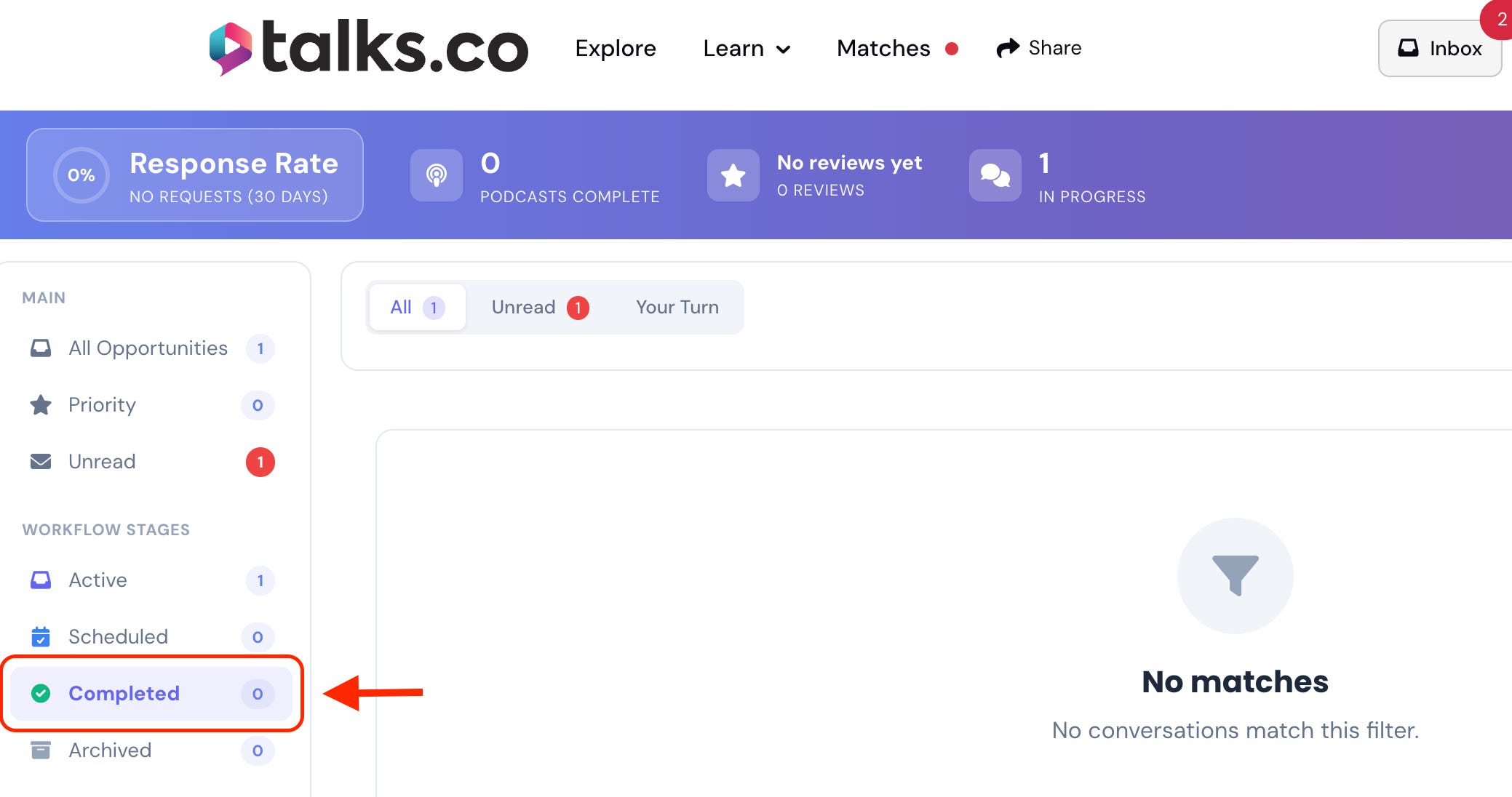
Log the completed interview inside Talks immediately so the platform can prompt the review step and your completed interview count updates accurately.
Why doing this immediately matters: Your completed count is public and visible to every host who looks at your profile. Keeping it accurate and up to date is one of the simplest things you can do to build credibility passively.
What the platform does next: Prompts both you and the host to leave a review for each other. This is the step that most guests skip and it’s the step that starts building your reputation on the platform in a way that every future host can see.
Leave a review for the host
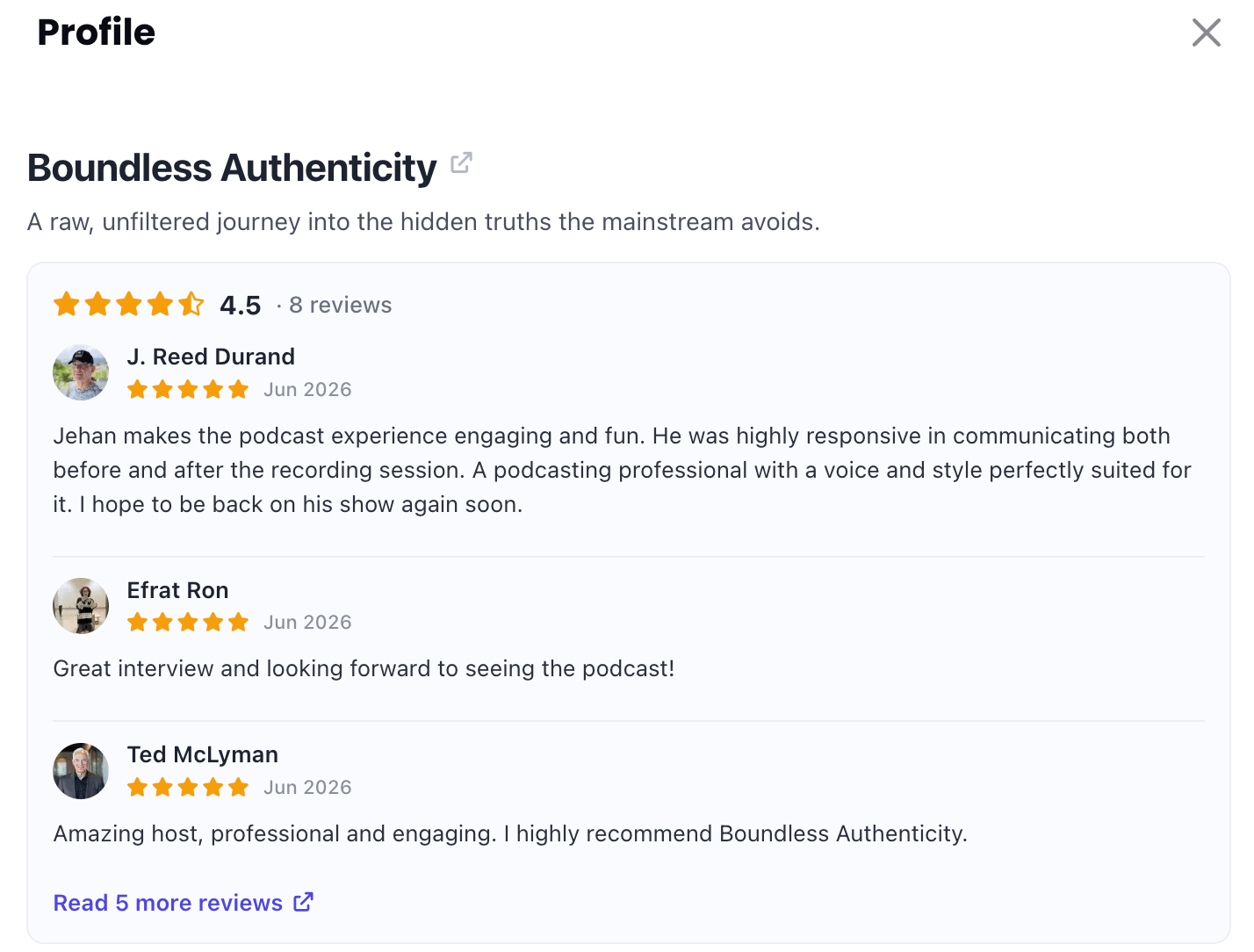
A genuine, specific written review left promptly after the interview is one of the highest-value actions available to a guest on Talks.
What to include: Something specific about the host’s preparation, the quality of the conversation, or how they made you feel as a podcast guest.
Why leaving reviews matters beyond reciprocity: Hosts who receive thoughtful reviews share them, mention them to their audiences, and remember the guests who wrote them when future episodes come up.
The timing that works best: Within 24 hours while the conversation is still fresh enough to write something genuine.
💡 The guests who get invited back for second appearances and referred to other hosts aren’t always the ones with the most polished delivery. They’re the ones who showed up prepared, stayed present throughout, and followed through on everything they said they’d do after the recording.
Preparation gets you into the room. Follow-through keeps you in it.
The Reframe Worth Carrying Into Every Interview
Every podcast interview you do is a sample of what it’s like to have a conversation with you.
Hosts talk to other hosts. Listeners become hosts. The guest who shows up prepared, delivers specific value, and follows through after the recording is the guest whose name gets mentioned when a host asks their network for recommendations.
A great first interview doesn’t just produce one episode. It produces the conditions for the next one.
This is Part 4 of a 5-part series on landing your first 10 podcast bookings on Talks.co.
The full series:
✅ Part 1: Creating a guest profile hosts actually want to book
✅ Part 2: Sending your first connection request and starting conversations with hosts
✅ Part 3: Moving from accepted connection to confirmed recording date
✅ Part 4 (you’re here): Preparing for your first interview and delivering a great guest experience
Part 5: Turning one podcast appearance into reviews, leads, referrals, and future bookings
🔖 Save this post before your first recording date. The 48-hour prep checklist and the five on-the-day habits above are the difference between an interview that produces one episode and one that opens doors to the next five.
P.S. The moment most first-time guests fumble is the end of the interview when the host asks where listeners can find them. One URL said clearly once is more useful than five options said quickly. Know your Talks.co profile URL before you go into any interview. That’s talks.co/yourname. Say it once. Say it clearly. Done. 👇
Keep Talking,
Liam
~
Visibility systems to grow your personal brand, audience + authority with guest appearances. First online sale in 2001. Built multiple 6–7 figure online businesses. 400+ interviews. Malta, Stockholm, Sydney. Love soccer, surf & burritos.