
The Guest Profile That Makes Hosts Want to Book You Before You Ever Send a Message
How to create a Talks guest profile that signals credibility, attracts the right shows, and starts working for you from day one

Most people join a podcast booking platform and go straight to browsing shows.
Understandable. The whole point is to get booked. But sending connection requests before your profile is built properly is like showing up to a job interview without a resume and hoping your enthusiasm carries the day.
The profile comes first. Everything else follows from it.
A complete, specific Talks guest profile does 3 things simultaneously:
It tells the AI matching algorithm exactly what kind of shows to surface for you.
It gives hosts everything they need to say yes when they look you up.
It starts ranking on Google for your name so that every appearance you make points back to a page that builds your credibility automatically.
20 minutes of setup. A podcast guest profile that works indefinitely.
What a Podcast Guest Profile Is Actually For

Most beginners think of their guest profile as a bio. A place to describe themselves.
A guest profile on Talks is a decision-making tool for hosts. Every element on it should answer one of three questions a host is silently asking when they look you up.
Is this person credible? Do they have something worth saying and proof that they’ve said it well before?
Is this person a fit? Will their topics resonate with my specific audience right now?
Is this person easy to work with? Have they given me enough information to make this decision quickly and confidently?
Build your profile with those three questions as your filter and you’ll be ahead of the majority of guests pitching right now.
What Goes On a Guest Profile That Actually Gets Bookings?
The platform walks you through profile creation with AI assistance so you’re not starting from a blank page. Six elements determine whether your profile converts profile views into connection requests.
1. 🏷️ Your username
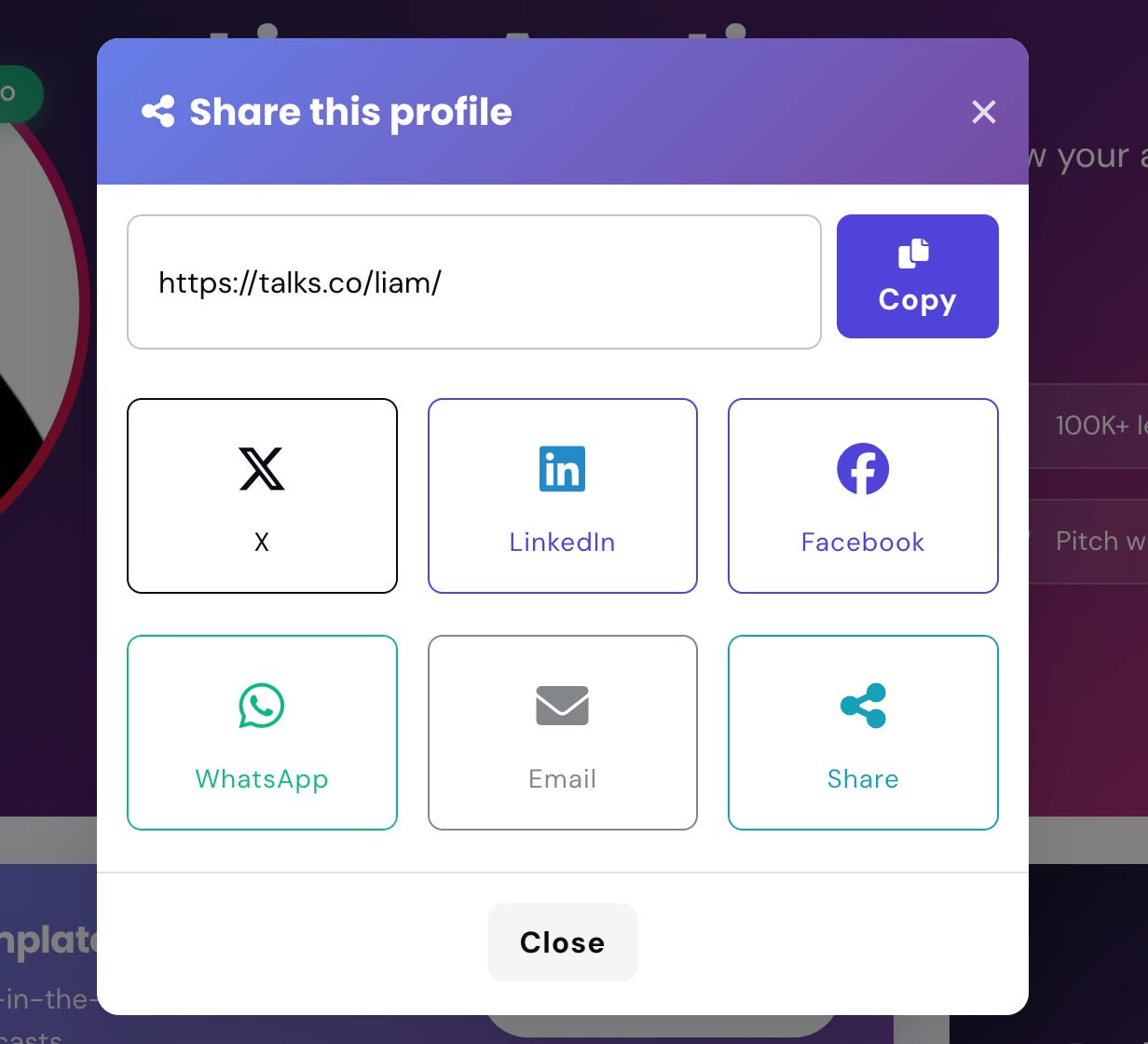
Your username becomes your permanent public URL, for example talks.co/yourname, and it affects how quickly your profile ranks on Google for your name.
What to choose: Your real name or your personal brand name; whatever you use consistently across your other platforms.
Why it matters: This URL lives on every pitch you send, every show notes page that mentions you, and every social profile you link it from. Choose it once and commit.
What to avoid: Random strings, nicknames that don’t match your professional brand, or anything that’ll need changing in six months.
2. 📝 Your headline
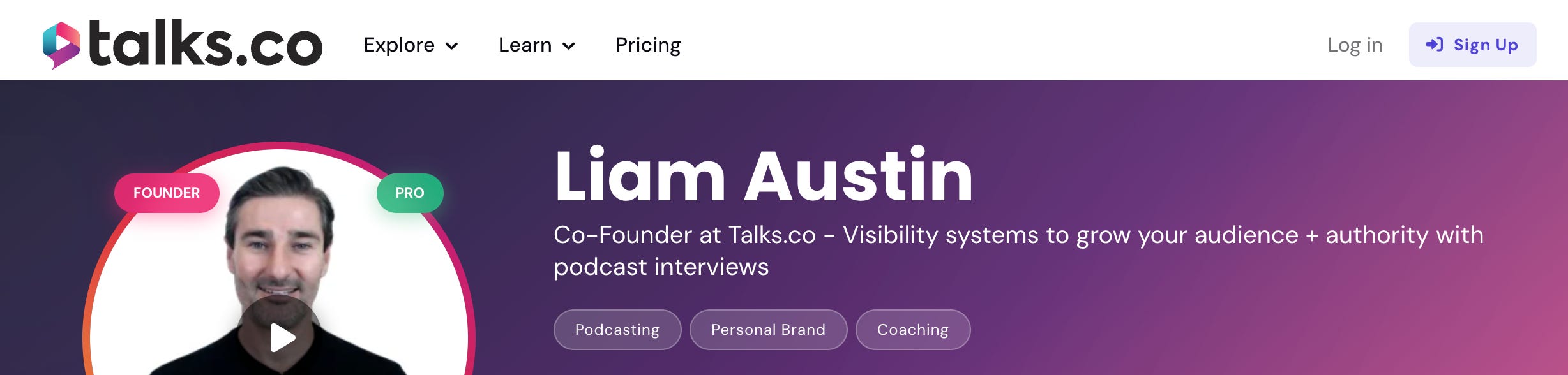
Not your job title. Not “entrepreneur and coach.” The specific line that tells a host exactly who you help and what you talk about.
What it replaces: A generic descriptor that could belong to any guest in any niche.
What it should do: Function as the first 5 seconds of your pitch, written out in one sentence.
The test to apply: Could this headline belong to someone in a completely different niche? If yes, it needs more specificity.
3. 🎯 Your topics
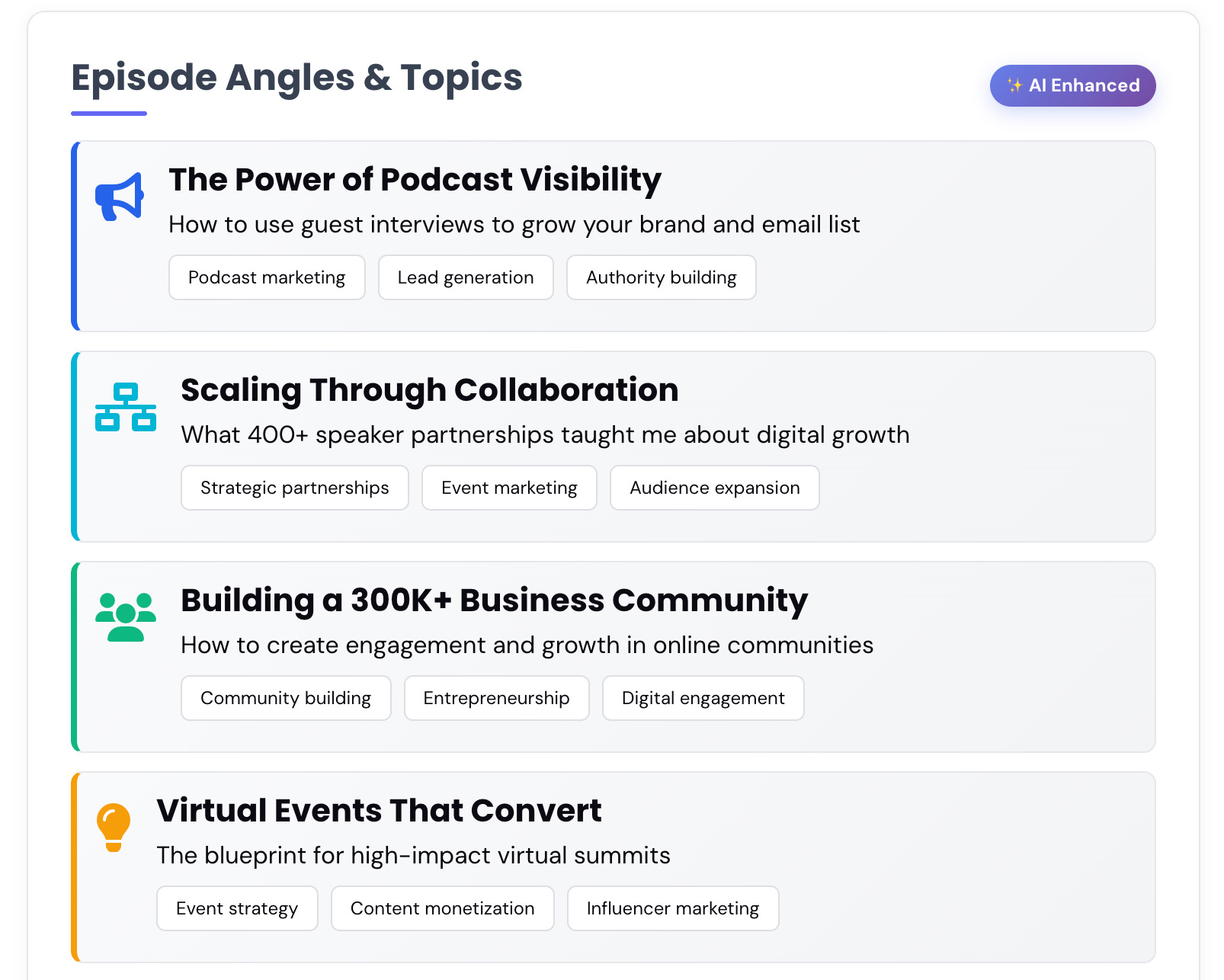
Your topics are the primary signal the AI uses to match you with the right shows. Vague topics produce vague matches.
What most beginners write: “Business,” “mindset,” “personal development.”
What actually gets matched: “How coaches build authority through podcast guesting,” “the first 90 days of launching a consulting practice,” “building an audience without paid ads.”
The rule: If your topic could describe any guest in your general space it’s not specific enough.
4. 📖 Your story
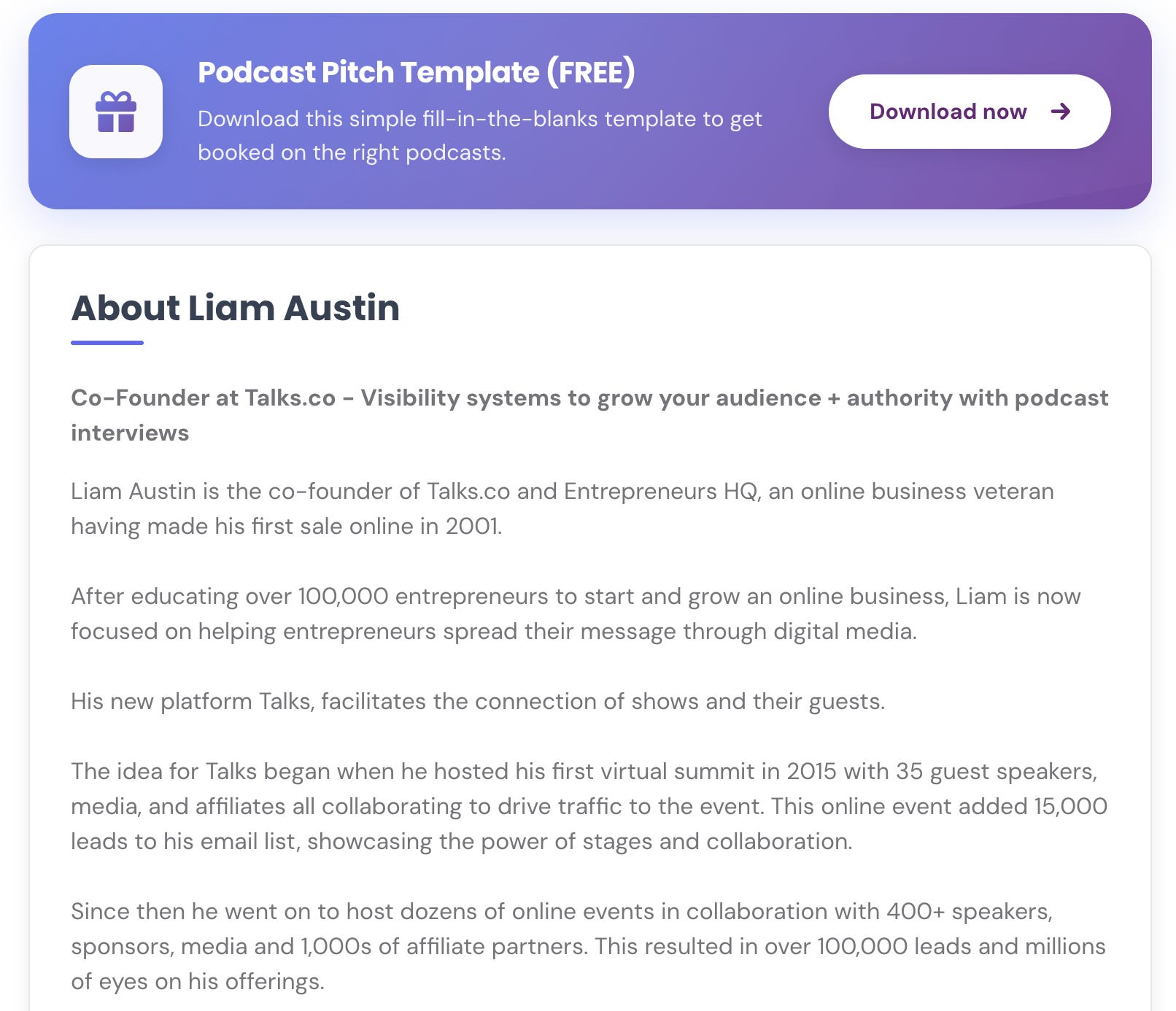
A short version of how you got to where you are, written for context rather than impressiveness.
What hosts are actually looking for: Why your perspective is earned, not just claimed.
What length works: 3 to 5 sentences. anything longer starts to read like a resume.
What tone to aim for: Conversational and specific; the kind of thing you’d say if someone asked you at a conference how you got into your work.
5. ❓ Suggested interview questions
5 to 7 questions a host could ask you, ready to use or adapt.
Why this is the most underused element on most profiles: Most guests don’t include suggested questions, which means the ones who do stand out immediately.
What it signals to a host: That you understand how interviews work, that you’ve thought about their audience, and that you’re not going to make their pre-production harder.
The practical upside: Some hosts will use your questions almost word for word, which means you already know what’s coming and can prepare your best answers in advance.
6. 🎙️ Your past appearances
Every show you’ve appeared on belongs here, even small ones.
What to include: Show name, episode title if you have it, and a live link if the episode is still accessible.
What if you have no past appearances yet: Lead with your story and your topics harder; every guest starts somewhere and hosts understand that a strong profile with no past appearances is still a meaningful signal of seriousness.
What this builds over time: A visible track record that removes hesitation from hosts who are evaluating whether to take a chance on you.
5 Steps to Get Your Talks Guest Profile Ranking on Google
Your Talks profile lives at talks.co/yourname and it can show up in the top 10 Google results for your name within a few weeks if you follow these steps.
Create your profile and choose your username deliberately
Copy your profile link from the Share page inside Talks
Add your Talks link to every social profile, LinkedIn, Instagram, Facebook, Twitter/X, TikTok, and Linktree, and name it “Your Name Speaker Profile” in any website field
Add your Talks link to your email signature with a line like “Book me as a podcast guest”
Add your Talks link to your website or about page with a CTA like “Request an interview”
Keep the link prominent on LinkedIn for at least 1 to 3 months while Google indexes and associates the profiles. Members who follow all 5 steps consistently report ranking in the top 10 Google results for their name within a few weeks to three months.
💡 Talks profiles are also being picked up by AI tools like ChatGPT and Perplexity. When someone asks an AI who speaks on a specific topic, a complete and well-linked Talks profile increases the chances of your name being recommended. The same five steps that help Google find you help AI find you too.
The Reframe that Changes Everything 🔑
Getting booked on podcasts feels like an outreach problem until you build a profile that removes the need for most of the outreach.
Hosts on Talks are actively looking for guests right now. They’re browsing profiles, rating matches, and sending connection requests to people whose profiles answer their 3 questions clearly and quickly.
Your Talks podcast guest profile is what determines whether they find you and whether they like what they find when they do.
Build it properly once. Let it work for every booking that follows.
This is Part 1 of a 5-part series on landing your first 10 podcast bookings on Talks.co.
The full series:
✅ Part 1 (you’re here): Creating a guest profile hosts actually want to book
Part 2: Sending your first connection request and starting conversations with hosts
Part 3: Moving from accepted connection to confirmed recording date
Part 4: Preparing for your first interview and delivering a great guest experience
Part 5: Turning one podcast appearance into reviews, leads, referrals, and future bookings
🔖 Save this post before you open Talks. The six profile elements above are your checklist for building something that works from day one rather than something you’ll need to rebuild after your first few failed pitches.
P.S. The suggested interview questions section is the element most beginners skip because it feels like extra work. It’s actually the element that most immediately signals to a host that you understand how podcasting works and that you’re going to make their job easier rather than harder. Five questions. That’s the whole ask. 👇
Keep Talking,
Liam
~
Visibility systems to grow your personal brand, audience + authority with guest appearances. First online sale in 2001. Built multiple 6–7 figure online businesses. 400+ interviews. Malta, Stockholm, Sydney. Love soccer, surf & burritos.